On February 1, 1552, Sir Edward Coke was born. What he did matters to you.
Three types of oppression drove the English to the New World: political, religious, and economic. Political oppression, however, led to the most significant amount of resistance in England.
The Stuart Monarchs bullied the courts, forcing the judges to do their bidding. Chief Justice Coke, believing Monarchs are not above the law, courageously withstood King James the First, who, as a result, angrily dismissed the just judge. Justice Coke told the king that the common law bound him, and tyrants never like words like “bind” being applied to them.
Coke’s courage inspired future opponents of arbitrary government, especially the American Founders. American lawyers studied Coke well into the 19th century. America’s famous Revolutionary Orator, Patrick Henry, devoured “Coke Upon Littleton” when preparing to become a lawyer. That book was one of Coke’s four-volume set called “Institutes of the Laws of England.” The volume Henry studied contains the text of Sir Thomas Littleton’s 1481 treatise on property with an English translation and commentary by Coke. With help from Coke, Henry passed his law exams with flying colors.
The rest is history!
Patrick Henry was instrumental in standing up to the arbitrary acts of King George the Third. Sir Edward Coke’s works helped shape Henry’s thinking on the principles of liberty. Henry’s speeches helped influence the thought of all Americans as they faced tyranny, especially his Stamp Act speech in the House of Burgesses. Thomas Jefferson happened to be in the audience when Henry gave that speech. So inspired by Henry’s words, Jefferson called that day the most important day of his life.
The rest, once again, is history!
Coke didn’t win all his battles, but he inspired those who came after him. We may not see the results of our work in our lifetime, but we can influence future generations. Imagine if Coke could see into the future, knowing he influenced Henry and Jefferson, men who would, in turn, create a Declaration of Independence, a Bill of Rights, and the U.S. Constitution – in short, an Empire of Liberty and Reason!
Do not despise your contributions to future generations, even if they seem small in your eyes.
— Daniel Sheridan 224-216-8349 “When I have a little money, I buy books; and if I have any left, I buy food and clothes.” ― Desiderius Erasmus Roterodamus
Did you know…? “The 4th of July was originally celebrated as Americas Birthday?” But, the idea of an annual day specifically celebrating the Flag is believed to have first originated in 1885.
Just recently I went to the Indiana State Capital to meet with Daren Gardner. Mr. Gardner is riding his motorcycle across America. You can read more about him at Constitution Ride Across America. http://www.craa2010.com. He […]

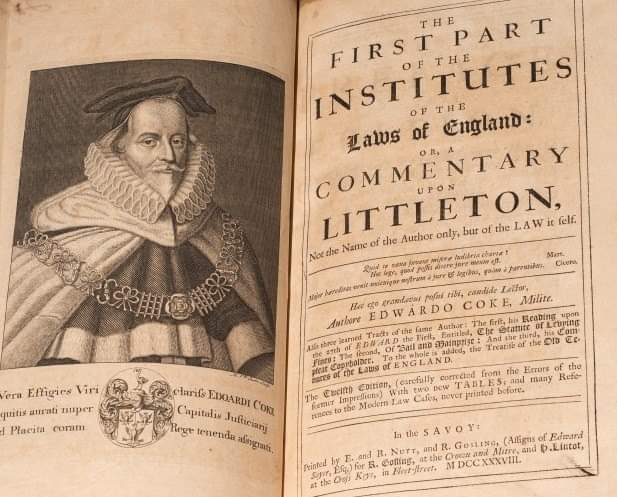
Sir Edward Coke – By Daniel W. Sheridan
On February 1, 1552, Sir Edward Coke was born. What he did matters to you.
Three types of oppression drove the English to the New World: political, religious, and economic. Political oppression, however, led to the most significant amount of resistance in England.
The Stuart Monarchs bullied the courts, forcing the judges to do their bidding. Chief Justice Coke, believing Monarchs are not above the law, courageously withstood King James the First, who, as a result, angrily dismissed the just judge. Justice Coke told the king that the common law bound him, and tyrants never like words like “bind” being applied to them.
Coke’s courage inspired future opponents of arbitrary government, especially the American Founders. American lawyers studied Coke well into the 19th century. America’s famous Revolutionary Orator, Patrick Henry, devoured “Coke Upon Littleton” when preparing to become a lawyer. That book was one of Coke’s four-volume set called “Institutes of the Laws of England.” The volume Henry studied contains the text of Sir Thomas Littleton’s 1481 treatise on property with an English translation and commentary by Coke. With help from Coke, Henry passed his law exams with flying colors.
The rest is history!
Patrick Henry was instrumental in standing up to the arbitrary acts of King George the Third. Sir Edward Coke’s works helped shape Henry’s thinking on the principles of liberty. Henry’s speeches helped influence the thought of all Americans as they faced tyranny, especially his Stamp Act speech in the House of Burgesses. Thomas Jefferson happened to be in the audience when Henry gave that speech. So inspired by Henry’s words, Jefferson called that day the most important day of his life.
The rest, once again, is history!
Coke didn’t win all his battles, but he inspired those who came after him. We may not see the results of our work in our lifetime, but we can influence future generations. Imagine if Coke could see into the future, knowing he influenced Henry and Jefferson, men who would, in turn, create a Declaration of Independence, a Bill of Rights, and the U.S. Constitution – in short, an Empire of Liberty and Reason!
Do not despise your contributions to future generations, even if they seem small in your eyes.
—
Daniel Sheridan
224-216-8349
“When I have a little money, I buy books; and if I have any left, I buy food and clothes.” ― Desiderius Erasmus Roterodamus
Recent Posts
Games – Flag Day
Did you know…? “The 4th of July was originally celebrated as Americas Birthday?” But, the idea of an annual day specifically celebrating the Flag is believed to have first originated in 1885.
C.J.
Just recently I went to the Indiana State Capital to meet with Daren Gardner. Mr. Gardner is riding his motorcycle across America. You can read more about him at Constitution Ride Across America. http://www.craa2010.com. He […]
Happy Birthday America!!! Posted by Walker (13)
Posted on 02 July 2010 by admin
We celebrate with fireworks, ice cream, picnics, and games, but what does it all really mean. I […]
WE THE KIDS Interview with Congresswoman Jackie Walorski – 2010
June 9, 2010
Signers of the Declaration of Independence
Posted on 08 June 2010 by admin
Rachel Ann
John Hancock was born in Braintree, Massachusetts on January 23rd, 1737. […]